
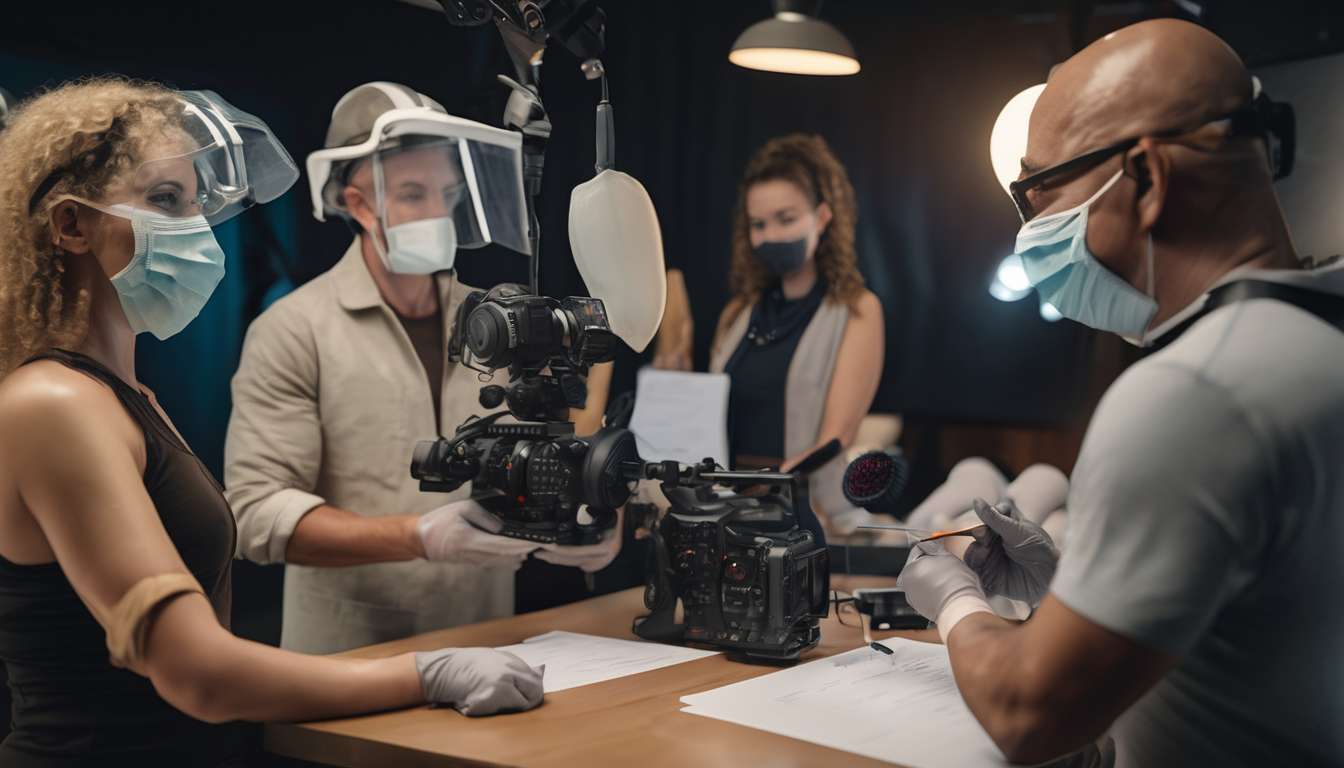
Early one morning on set, we found the usual hum of equipment interrupted by a small circle of performers and crew, quietly debating a clause in a new contract over cold coffee.
We listened as a veteran grip explained a change in break scheduling, while a performer asked about consent documentation and a production assistant raised safety concerns for stunts.
That informal exchange captured how labor standards are evolving across adult movie production sets: through conversations that blend practical experience with a growing awareness of rights and professional norms.
We have watched informal rules harden into written policies, and seen individuals advocate for clearer boundaries, fair pay, and accessible reporting mechanisms.
In this article, we trace how those grassroots discussions have influenced producers, influenced union talks, and reshaped daily practices—showing how a once-shadowy sector is adopting more transparent, worker-centered standards without losing the creative energy that drives it.
Historical Labor Shifts
We trace how technological, legal, and cultural changes shifted labor roles and protections in the adult film industry over the past century.
Early informal sets evolved into organized productions, where consent protocols became recognized needs rather than assumed practices. As cameras got smaller and distribution widened, performer safety emerged as a workplace issue, prompting collective efforts to standardize on-set procedures and medical checks.
Legal developments forced clearer terms and greater transparency.
- Contract transparency moved from rare courtesy to expected baseline.
- Producers and performers increasingly clarified rights and limits before work began.
Cultural shifts supported accountability and mutual respect.
- Community accountability helped normalize reporting concerns and supporting those affected.
- Informal networks pressured institutions to adopt clearer policies.
Unions and advocacy groups amplified labor priorities.
- Advocacy increased visibility of safety, consent, and fair labor practices.
- Collective organizing turned informal norms into formal expectations.
Conclusion: labor standards grew gradually through struggle and reform.
We’re reminded that improved protections did not appear overnight; they developed through shared struggle, practical reforms, and a commitment to making production spaces safer, fairer, and more inclusive for everyone involved.
Consent and Documentation
Clear, written agreements and documented consent steps are essential tools we use to protect performers’ boundaries, clarify expectations, and provide recourse if disputes arise.
We prioritize consent protocols that are explicit, revisitable, and tailored to each scene so everyone feels respected and secure.
We record verbal confirmations and have written checklists that performers can review and revoke before any action begins.
We build a culture where asking for clarification is encouraged, not stigmatized, because belonging grows when voices are heard.
We train crews to recognize nonverbal cues and to pause when uncertainty appears, reinforcing performer safety as a shared responsibility.
We commit to contract transparency in our documentation practices:
- Clear language so terms are understandable.
- Accessible copies so everyone has their own record.
- Explanations of rights so no one feels excluded by legalese.
By combining rigorous consent protocols, visible documentation, and communal support, we create sets where accountability and mutual care are standard, and where performers trust that their wellbeing is central to production decisions.
Pay and Contract Clarity
We spell out pay rates, payment schedules, and any deductions in plain language so everyone knows exactly how and when they’ll be compensated.
We define payment triggers tied to completed work, cancellations, and reshoots, and state dispute-resolution steps that are clear and accessible so no one is left isolated.
We make contract transparency a baseline:
- Clear clauses that cover scope and responsibilities.
- Defined deliverables with measurable acceptance criteria.
- Explicit timelines for delivery and payment.
We include consent protocols within agreements so performers can reference expectations and boundaries without searching elsewhere.
We prioritize performer safety in our financial terms, ensuring delayed payments or withholding never compromise access to essential resources like testing or medical care.
We share standard contract templates and encourage open communication:
- Questions and revisions are welcomed.
- Notarized addenda are available when requested.
We maintain records of signed agreements and receipts so the whole team can verify compliance.
We foster a collaborative, respectful culture where asking for clarification is encouraged and everyone feels they belong to a professional environment that respects their labor, dignity, and rights.
Safety Protocols On Set
We establish and enforce clear, documented on-set safety procedures.
- What this covers: health checks, hazard assessments, emergency plans, and personal protective measures.
- Why it matters: everyone knows what’s required and who’s responsible.
We create and maintain a culture where consent protocols are central.
- Key actions: routinely review consent protocols and make them easy to invoke.
- Non-negotiable: performer safety must never be optional.
We train crews and performers together.
- Training focus: shared language about boundaries, safe words, and escalation steps.
- Benefit: everyone understands expectations and responses.
We maintain contract transparency.
- Visible elements before call time: safety clauses, reporting processes, and contact points.
- Outcome: colleagues feel secure and included.
We assign a dedicated safety officer on each shoot.
- Responsibilities: monitor compliance, address hazards, and coordinate emergency response.
- Organizational note: the role is supported without stigma.
We document incidents and corrective actions openly.
- Use of records: improve practice and reinforce trust.
- Goal: continuous learning and safer environments.
By centering clear rules, shared responsibility, and mutual respect, we strengthen belonging and ensure on-set environments where people can work confidently and safely.
Health and Wellness Measures
We prioritize proactive health and wellness measures that keep performers and crew physically and mentally fit for work.
Key actions include:
- Routine screenings and preventative care.
- Access to medical and mental-health support.
- Clear rest and recovery policies.
We create environments where everyone feels seen and supported.
Principle: Health protocols are collaborative rather than punitive.
We embed consent protocols into daily practice.
Standards:
- Choices are documented, respected, and revisited throughout production.
- Consent is treated as ongoing, not one-time.
We maintain on-site or readily available clinical services and confidential counseling.
Goal: Make care accessible without stigma.
We recognize performer safety as central to dignity and retention.
Operational measures:
- Scheduling that avoids burnout.
- Enforced breaks.
- Straightforward, non-retaliatory incident reporting.
We insist on contract transparency that clearly spells out health provisions, coverage, and reimbursement.
Outcome: People know what care they can expect.
We involve performers in policy review and share aggregate health outcomes.
Purpose: Build trust through participation and transparency.
By blending practical resources with open communication, we sustain a community where wellbeing is a shared responsibility and everyone can rely on clear, fair support.
Training and Professionalization
We provide comprehensive, ongoing training that equips performers and crew with the skills, professional standards, and career-development pathways they need to work safely and advance in the industry.
We build curricula that center consent protocols and clear communication, so everyone understands boundaries before cameras roll.
We train for performer safety with practical workshops on on-set ergonomics, de-escalation techniques, and incident reporting, creating shared expectations and trust.
We offer mentorships and peer-led sessions to normalize questions, share experience, and reduce isolation.
- Newcomers see that they’re joining a community that values their dignity and growth.
- Peer support helps retain talent and fosters knowledge transfer.
We include modules on contract transparency so people know their rights, payment terms, and recourse options.
- Understanding contracts reduces anxiety and empowers career choices.
- Clear contract education improves negotiation outcomes and reduces disputes.
We regularly evaluate training outcomes with participant feedback and adjust content to emerging needs.
- Collect participant feedback and outcome metrics.
- Revise curricula based on gaps, incidents, and industry changes.
- Re-run training and reassess impact.
By investing in skill-building, standardized practices, and open dialogue, we create workplaces where people belong, feel protected, and can pursue sustained, respectful careers.
Unionization and Advocacy
We support and organize collective bargaining, legal advocacy, and public campaigns so workers can secure fair pay, safe conditions, and a stronger voice in industry decisions.
We build inclusive unions and advocacy networks that welcome performers, crew, and nonperforming staff, because collective power protects everyone.
We negotiate contracts that prioritize performer safety through clear consent protocols and enforceable health measures, and we train stewards to monitor compliance on set.
We pursue legal channels to defend rights and campaign publicly to shift norms and show members they’re not alone.
We push for contract transparency so terms aren’t hidden and bargaining is informed, and we use shared resources to help individuals understand their options.
We hold regular meetings and create safe reporting pathways, and we coordinate rapid responses to safety breaches.
By organizing together, we strengthen bargaining leverage and normalize consent protocols, elevating performer safety as a standard across productions.
Membership gives practical support, solidarity, and a direct role in shaping a more respectful, sustainable industry.
Transparency and Accountability
We demand clear, publicly available records of contracts, health compliance, and incident reports so everyone can hold companies and leaders accountable.
We insist on contract transparency so workers can understand terms, wages, and grievance procedures without fear.
We call for standardized consent protocols that are documented, searchable, and reviewed by third parties, ensuring that performers’ agreements are explicit and revocable.
We expect routine publication of health checks, safety audits, and incident follow-ups that protect confidentiality while proving compliance.
We want accessible channels for reporting concerns, backed by independent investigation and remedial action, so no one feels isolated when raising issues.
We promote shared forums where performers, crew, and producers can review policies, propose improvements, and vote on safety measures.
We commit to collective oversight that centers performer safety, balances transparency with privacy, and builds trust across our community.
We’ll push for enforceable standards, public metrics, and regular accountability reviews so standards improve and everyone belongs to a safer, fairer industry.
How do labor standards on adult film sets differ between countries with strict censorship laws and those with more permissive regulations?
Summary of differences in labor standards between stricter and more permissive countries
In countries with strict censorship:
- Tighter content controls lead to restricted types of work and greater risk of legal penalties for performers and producers.
- Limited worker protections mean fewer formal safety nets, less access to health services, and weaker enforcement of labor rights.
- Underground work increases, which often results in unsafe conditions, lack of documentation, and greater vulnerability to exploitation.
In permissive countries:
- Clearer regulations provide more predictable legal frameworks for employers and workers.
- Routine health checks and standardized safety practices are more common, supporting public health and worker well‑being.
- Unionization and collective bargaining are more feasible, giving performers avenues to negotiate terms and protections.
- Safer production practices generally reduce exploitation and occupational hazards.
Policy goals and recommendations
- Prioritize performers’ rights, consent, and well‑being across jurisdictions.
- Promote inclusive policies that ensure access to health services, legal protections, and safe working conditions.
- Encourage transparent regulation that balances public concerns with the rights and safety of workers.
- Support mechanisms for collective representation (e.g., unions, worker associations) to improve bargaining power and standards.
- Address underground practices by reducing criminalization where it endangers workers and by creating legal pathways for safer work.
Overall conclusion
- Harmonizing labor standards to protect consent, health, and safety—while respecting cultural and legal contexts—will help reduce exploitation and improve outcomes for performers everywhere.
What technologies (e.g., AI, deepfakes, blockchain) are being used to protect performers’ likenesses and earnings, and what new labor challenges do they create?
We’re seeing AI tools, deepfake detection, digital watermarks, and blockchain-based smart contracts used to safeguard performers’ images and payments.
We’re building verification systems and immutable records so creators get paid and likenesses aren’t misused.
New risks are emerging:
- Synthetic impersonation
- Surveillance
- Consent-management complexity
- Unequal access to protection tech
We’re pushing for shared standards, affordable tools, and community-driven enforcement to keep protections fair and inclusive.
How are independent or self-produced performers navigating labor protections compared with those working for larger studios or platforms?
Independent/self-produced performers face different labor-protection challenges than those at larger studios or platforms.
Larger studios/platforms typically provide formal employment structures, collective bargaining, payroll benefits, and institutional legal teams that enforce contracts, process taxes, and protect worker rights. They can offer clearer pathways for dispute resolution and stronger leverage with platforms over pay, content use, and likeness rights.
Independent/self-produced performers must often create or access alternative protections:
-
Forming cooperatives and resource-sharing networks
Cooperatives pool bargaining power, split overhead, and enable shared access to equipment, venues, and distribution channels. -
Using contracts, insurance, and digital rights management (DRM)
Written contracts (even simple ones) clarify payment terms, licensing of likeness and content, and dispute processes. Insurance policies can cover liability and income loss. DRM and watermarking help track and control reuse of digital content. -
Trading knowledge on grants, tax rules, and platform policies
Peer education helps performers find funding, optimize tax treatments (self-employment, deductions), and navigate platform-specific monetization and takedown procedures. -
Pressuring platforms for fair terms
Collective advocacy, coordinated complaints, and public campaigns can push platforms to adopt clearer, fairer policies on revenue splits, content control, and moderation transparency. -
Relying on community legal clinics and mutual aid
When access to employer-provided legal help or benefits isn’t available, community clinics, pro bono lawyers, and mutual-aid funds provide dispute assistance, emergency support, and legal guidance.
Key tradeoffs and practical tips
-
Tradeoff: Autonomy vs. Protection.
Independents keep creative control but must proactively secure protections that employers normally provide. -
Tip: Standardize simple, reusable contracts.
Create templates for licensing, performance agreements, and collaborator splits to reduce negotiation friction. -
Tip: Build collective leverage early.
Cooperatives or unions increase bargaining power with platforms and venues. -
Tip: Prioritize documentation and metadata.
Keep records of agreements, timestamps, and originals to strengthen claims about pay and likeness usage. -
Tip: Mix formal and informal supports.
Combine legal contracts with community-based mutual aid and insurance to cover gaps.
Bottom line: Independents can approximate many protections of larger employers through cooperatives, shared knowledge, contracts, insurance, DRM, and community legal support — but doing so requires proactive organization, standardized tools, and collective action to shift platform and market power.
Conclusion
You’ve seen how labor standards in adult film production have shifted toward clearer consent, better documentation, and fairer pay.
You now recognize the role of safety protocols, health measures, and professional training in protecting performers.
As unions and advocates push for stronger rights, transparency and accountability become central.
Moving forward, you’ll benefit from continued emphasis on contracts, wellbeing, and oversight—ensuring the industry treats workers with the dignity, protection, and clarity they deserve.